|

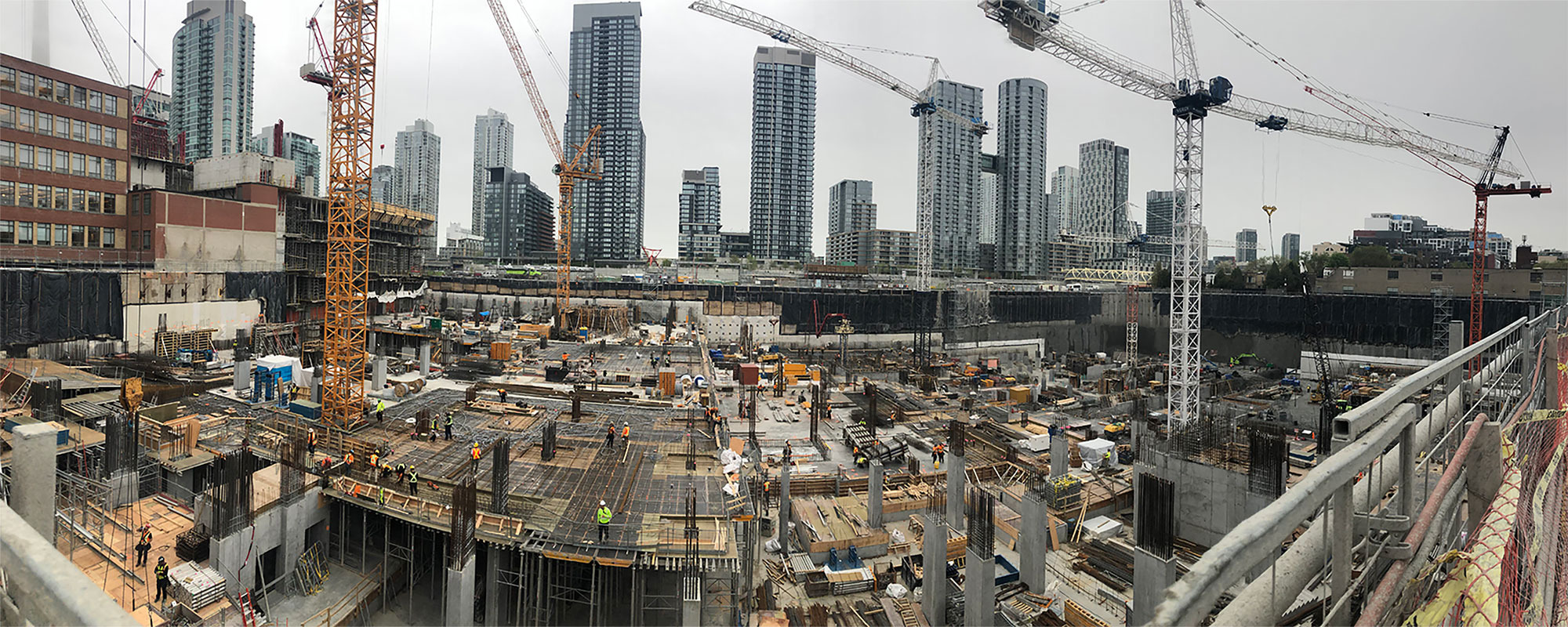
The SWA Fishing Derby was held July 29.
It was a beautiful day and everyone on board the DRE boat
caught a fish.
We caught rainbow trout, brown trout, chinook and coho salmon.
I'd like to thank CETCO, EMSEAL, Evonik, Koster and Neogard
for their support
The SWA will be hosting a seminar in September.
Visit the
SWA
Website
for more information

|
|

Did you know...
Box-Lunch Presentations
covering a variety of topics on waterproofing and expansion
joints can be scheduled at your convenience?
Contact Marla Cosburn
to book your next meeting:
marla@dre.ca
|
Missed a Newsletter?
Did you know that all the old issues of the DRE newsletter
are posted on our website? You will find a number of interesting
technical articles, project profiles and application tips
for the various DRE represented products.
DRE
newsletter archives
|
 |
|

SWRI Validation Program
SWRI is an international trade association
that represents the commercial sealant, waterproofing and
restoration construction industry.
Neogard's Auto-Gard and Auto-Gard FC have
both passed the SWRI Deck Coating Validation. For information
on SWRI and the validation program visit their website.
|
|
|
Have you been to Emseal.com
lately? With almost daily technical updates, a video
library and a blog
full of interesting job site challenges and installations,
this website is one of the best expansion joint resources
I've seen. If you haven't been there in a while, check it
out: www.emseal.com
This month, Brian Rooney of Stego
Industries has written the second in his series of essays
addressing the impact of the VOC regulatory changes taking
effect in September, specifically as they relate to under-slab
vapor barriers.
Last month, while in Banff, I had
the opportunity to take a walk on the Neogard coated top deck
of the parking garage at the Banff Springs Hotel. After 10
years, the Auto-Gard coating looks great. See the project
profile below for more information on this impressive project.
Hopefully you are finding time to
enjoy great weather.
Best Regards,
Marla
|
|
The
VOC Laws Change
September 9, 2010
As of September 9, 2010, Volatile
Organic Compound (VOC) concentration limits for architectural
coatings will go into effect. These regulations cover all
Architectural, Industrial and Maintenance (AIM) coatings under
the statutory authority of the Canadian Environmental Protection
Act, 1999.
There is a two-year "sell through"
period allowing products manufactured before the implementation
date to be sold until 2012.
In order to accommodate multi-phased
projects and previously specified jobs, we have a limited
inventory of non-compliant products available.
The following products will not
meet the new maximum 400 g/lt VOC requirement effective September
9, 2010:
- Dry-Trete 40
- Chem-Trete 40D
- Chem-Trete 40H
- Chem-Trete 40 VOC
- Chem-Trete PB VOC
Click
here for a list of products that meet the new VOC requirements.
For more information, please contact
Marla at 416-233-1603 or marla@dre.ca.
|
|
Project
Profile: Banff Springs Hotel
The Banff
Springs Hotel was built more than a century ago and shares
a rich history with Banff National Park, a Unesco World Heritage
Site.
The hotel was styled after a Scottish
Baronial Castle and has an award winning stand-alone parking
garage built in the late 1980's.

The exterior deck coating system
(non-Neogard) was in need of maintenance approximately 10
years ago. Neogard
was called in by the owner and Read Jones Christoffersen Structural
Engineers to review the existing system on the top exposed
deck and discuss performance of Neogard's AutoGard
line of traffic bearing waterproofing systems.
Since the deck is an exposed deck
with unvented metal pan construction and a poured-in-place
concrete deck surface, the AutoGard system was selected based
on performance history and a long Canadian track record on
exterior applications.
Neogard's licensed applicator, Place
Crete Systems Inc. of Calgary, Alberta, removed the old system
and replaced it with AutoGard.
The 35,000 square foot exposed top deck has performed well
for over 10 years under severe winter conditions and snow
removal.
For more information, please contact
marla@dre.ca
|
|
You
have to take the ground out of play
By Brian Rooney
There is a constant vapor pressure
differential between the sub-grade (higher pressure) and your
acclimatized building. That leads to vapor drive, moving from
the sub-grade into the building, passing through the slab.
Unlike above-grade, it doesn't reverse directions.
However, modern flooring is low permeance and acts like a
vapor barrier on top of the slab. If the vapor-proofing below
the slab isn't adequate, then more vapor will enter the slab
than can pass through the flooring. The net inflow of vapor
causes the relative humidity to go up in the slab. If it gets
high enough that you get to dew point conditions, the vapor
condenses into the liquid water phase.
The newly condensed water dissolves the soluble alkaline salts
that are naturally in the concrete. The salts raise the pH
into the 11-12 range.
Here's the problem. Soon, you will be using water-based adhesives
and coatings. They can't withstand being in contact with alkaline
water with a pH greater than 9-10. As a reminder, pH is a
logarithmic scale. So, 11 is ten times more alkaline than
10.
The high alkalinity causes the adhesive/coating to re-emulsify
and you end up with an expensive flooring failure.
In order to avoid this, you need to take the ground out of
play. There are two operative parts to this condition: soluble
alkaline salts and liquid water. You can't avoid the salts
in the concrete, so you need to avoid dew point conditions.
You'll accomplish that by protecting the slab with an "effective"
vapor barrier. I'll define "effective" in a future
essay.
For more information on Stego,
contact marla@dre.ca
|
|
New
Acoustic Seal "QuietJoint"
Emseal's QuietJoint
is sound, draft, heat, cold, and dust blocking acoustic joint
filler for interior, non-moving joints and gaps. Colorized,
versatile and ideally suited to filling gaps between the ends
of permanent, semi-permanent, or movable partitions, head-of-wall
and other conditions.
For vertical and horizontal-plane
joint-gaps from 1/2" (12mm) to 6" (150mm).
26
Standard Silicone Colors, custom
colors, non-invasive
anchoring, thermally
insulating, acoustic
dampening, rapid installation, economical.
QuietJoint-SHH
is coated on two faces and is ideal for gaps between opaque
or solid partitions or wall. The coating can be the same color
on both faces to coordinate with wall coverings.
QuietJoint-SHH
|
QuietJoint-SHG
|
QuietJoint-SHG
is coated on a third face and is typically used to fill gaps
between the glass of curtain wall or windows on one side and
solid substrates on the other. The third coating aesthetically
covers the foam core so that the foam is not visible through
the glass. The coating can be the same color on all three
faces or different on each face to coordinate with wall coverings.
(Note: color transitions between different faces may blur).
Self-extinguishing, fire-retardant-acrylic-impregnated
foam, factory pre-coated with high-quality silicone. Clean
handling, UV stable, non-staining, low temperature flexible,
high-temperature stable.
Supplied in full-story, 10-foot lengths,
uncompressed and slightly over sized, material is compressed
by hand and squeezed into the gap or opening. The material
folds in its center along a tooled crease to absorb slight
variations in substrates. The internal back pressure of the
material locks it to the joint faces.
For more information or a sample
of this product, please contact marla@dre.ca
|
|
Dew
Point Calculation Chart
Dew Point: Temperature at which moisture will condense
on the surface. No coatings should be applied unless surface
is a minimum of 5 degrees above this point. Temperature must
be maintained during curing, or Temperature should be steady
at falling, but never rising.
Example: If air temperature
is 70°F and relative humidity is 65%, the dew point is
57°F. No coating should be applied unless the surface
temperature of the concrete slab is 62°F minimum
Ambient Air Temperature
- Fahrenheit
Surface Temperature at which Condensation Occurs
Click
here for the Dew Point Calculation Chart.
For more information contact marla@dre.ca
|
|